Wednesday, July 29, 2009

The Box from Braunau Starts a Conversation


Last week I drove 50 miles north to pay a visit to Clayton Warman and his wife, Anne. Clayton is a decorated veteran of World War II who served alongside my father in Patton's Third Army, the 80th Infantry Division. I met him while working on the book, and we quickly became friends.

We settled in to catch up in his comfy living room that looks out on the Catoctin mountain range, and Clayton told me this story:

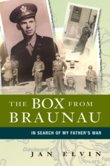
His granddaughter had stopped by the previous evening, just to say hi. My book, The Box from Braunau was on the floor by her chair. She saw it and asked her grandfather if he knew the soldier whose photo graced the cover. He said yes, he had known my father during the war.

Had I written about Clayton in the book? she asked then. When he said I had, she wanted to read it.

Over the course of the next three hours, she drew him into a conversation about the war - not only his personal stories and his feelings about going to war, but the wider implications regarding the political situation that led up to it.

My book got them talking. Clayton told me that none of his grandchildren had ever asked about his experiences during World War II before. He seemed happy that the book had opened the door to a new conversation with his young granddaughter.

Saturday, July 18, 2009

Women Veterans Are More Apt to Become Homeless


Men - they certainly took up most of the space in my book about my father and his experiences in World War II. The fighting Army then was made up entirely of men, with women occupying the more supportive roles. Of course, times have changed now, and women are part of the fighting force in Iraq and Afghanistan. Here are some startling and disturbing statistics about women veterans and homelessness, offered by Bryan Bender, of the Boston Globe (July 5, 2009). This came to me via Ilona Meagher's terrific blog.

"As more women serve in combat zones, the share of female veterans who end up homeless, while still relatively small at an estimated 6,500, has nearly doubled over the last decade, according to the Department of Veterans Affairs. For younger veterans, it is even more pronounced: One out of every 10 homeless vets under the age of 45 is now a woman, the statistics show. ...

"Overall, female veterans are now between two and four times more likely to end up homeless than their civilian counterparts, according to the VA, most as a result of the same factors that contribute to homelessness among male veterans: mental trauma related to their military service and difficulty transitioning into the civilian economy. ...

"According to the National Coalition for Homeless Veterans, a nonpartisan advocacy group in Washington, about 23 percent of the homeless population in the United States are veterans. Nearly half are from the Vietnam era and three-fourths experience some type of alcohol, drug, or mental heath problem. Most of the homeless vets, who are estimated by the Veteran’s Administration to number at least 130,000 on any given night nationwide, are men older than 50.

"With a new generation of veterans from Iraq and Afghanistan leaving the armed forces, however, the demographics are swiftly changing. And with more women serving on active duty - a full 15 percent of the military is now female - the share of female homeless veterans has grown from about 3 percent a decade ago to 5 percent, according to the VA."


There are more problems for women veterans. The Government Accounting Office (GAO) issued a report recently detailing significant barriers faced by women veterans when trying to access VA care. You can read more about this on the Iraq and Afghanistan Veterans of America (IAVA) website. This group works hard for the welfare of our veterans.

Wednesday, July 8, 2009

Box from Braunau Resonates with Baby Boomers


Thank you for coming to read my blog. In the weeks since The Box from Braunau came out, I've noticed that much of the interest in it comes from other baby boomers, that is, people whose fathers may have served in either World War II, or the Korean War. They want to touch the past, to understand their own father's war, or to fill in the gaps in their family history. The Box from Braunau has had an impact on them. Here are some of the comments readers have made:

"Your book and some of the similarities moved me immensely...The timing in your story and mine are different, some of the key characters rearranged, but at many points I felt like I was reliving some of my early angst through you. It has had a profound effect on my and I will have to put this on my list of all-time favorite books."

"I think there's much in the book that can touch a lot of people, not just those with fathers who 'went to war.' Don't we all, when we're older, wish we'd taken the time to talk more to our parents, find out who they really were - you actually followed through on that."

"I read your blog and was struck that our journeys to understand our fathers' war seem to be on parallel tracks. I think there must be countless baby boomers who are on the same path..."

"I connected with your story because of my own experience. My guess is that you hear from a lot of people about how the book helped them better understand their own fathers' experience.

"I am overwhelmed by your generosity in helping me find some piece of this big huge puzzle I've opened.

"My father was a bomber pilot in WWII. THis book helped me better connect to his era and understand why his war experience as a young man made such an indelible impact on the rest of his life."

"You are taking a great step in the healing work that continues generations after WWII."

Thanks to all readers for the comments so far. I would love to hear more from you. Share your stories with me by leaving a comment here!


Monday, June 29, 2009

The Term "PTSD" Hides the Truth


The controversial comedian George Carlin died a little over a year ago. I think the world is a duller place without him. Here is his riff on euphemisms —he's particularly angry here about the use of the term "PTSD," or "Post-Traumatic Stress Disorder." He thinks that "soft language" hides the reality and the humanity of what happens in combat when a fighting person's nervous system is stressed to its absolute maximum and cannot take any more. Here are Carlin's comments:

"I don't like words that hide the truth. I don't like words that conceal reality. I don't like euphemisms, or euphemistic language. And American English is loaded with euphemisms. Cause Americans have a lot of trouble dealing with reality. Americans have trouble facing the truth, so they invent the kind of a soft language to protect themselves from it, and it gets worse with every generation. For some reason, it just keeps getting worse. I'll give you an example of that.

"There's a condition in combat. Most people know about it. It's when a fighting person's nervous system has been stressed to it's absolute peak and maximum. Can't take anymore input. The nervous system has either (click) snapped or is about to snap.

"In the first world war, that condition was called shell shock. Simple, honest, direct language. Two syllables, shell shock. Almost sounds like the guns themselves.

"That was seventy years ago. Then a whole generation went by and the second world war came along and very same combat condition was called battle fatigue. Four syllables now. Takes a little longer to say. Doesn't seem to hurt as much. Fatigue is a nicer word than shock. Shell shock! Battle fatigue.

"Then we had the war in Korea, 1950. Madison avenue was riding high by that time, and the very same combat condition was called operational exhaustion. Hey, we're up to eight syllables now! And the humanity has been squeezed completely out of the phrase. It's totally sterile now. Operational exhaustion. Sounds like something that might happen to your car.

"Then of course, came the war in Viet Nam, which has only been over for about sixteen or seventeen years, and thanks to the lies and deceits surrounding that war, I guess it's no surprise that the very same condition was called post-traumatic stress disorder. Still eight syllables, but we've added a hyphen! And the pain is completely buried under jargon. Post-traumatic stress disorder.

"I'll bet you if we'd of still been calling it shell shock, some of those Viet Nam veterans might have gotten the attention they needed at the time. I'll betcha. I'll betcha."

Saturday, June 20, 2009

Nice reviews for The Box from Braunau!


I was happy to see my book get positive reviews from several blogs over the last week, so I'm going to spotlight three of them here.

  • Lavanya Karthik, of Mumbai, writes in her Bookpleasures review:
"Soldiers aren't the only casualties of war," says author Jan Elvin in the afterword of this engrossing and well written memoir.

What parts [her father] didn't write about, Ms. Elvin fills in the blanks with careful research. It gives a vibrant, living real experience, a snap shot of some of the worst fighting in WWII.

Well illustrated with black and white photographs, and supplemented by a comprehensive index, bibliography and glossary, this part history part memoir is of importance to scholar and general reader alike.

The Box from Braunau provides accessible and informative reading for all those interested in journalism and the social dynamics of warfare.

And please see my guest post at the Amacom author blog site, where I write about Five Things I Wish I'd Asked My Father about World War II.


Wednesday, June 17, 2009

On Father's Day

This will be the fifth Father's Day without my father, and I miss him. Not that we did much to mark the day — a card, brunch with my husband and son and any siblings who could make the trek. He never wanted a fuss made over him about anything. I recently found a letter I wrote him one Father's Day, nineteen years ago, noting the things that made him a wonderful dad.

Among them were his sense of loyalty to family, his integrity, his "brains," the trips we took to Glen Echo Park, the pool, and his love of his newspaperman job. He didn't say too much about the letter other than a sincere thanks for it. But he started writing some of his own. On my 50th birthday Dad sent a card that said, "As you consider your 50th, with mixed feelings, it may be of interest that, at the age of 78, I am enjoying one of the happiest years of my life."

That's really the best gift, and one I want to remember in regard to my son and all those relatives younger than I: creating a happy life is the best thing you can do for yourself, and for your children.
The photo is of Dad and me at Deep Creek Lake in Oakland, Maryland.

Wednesday, June 10, 2009

Holocaust Memorial Museum Shooting

I just heard about the shooting at the Holocaust Museum in Washington a few hours ago. I wasn't going to write about it, mostly because it looks to be a "lone shooter," James von Brunn, an 89-year old white supremacist who has apparently spent his life on a crusade against the government.

It appears to be one man who acted alone, although he wants to represent a vast conspiracy of haters bent on shooting innocent people, including families with children, who would visit the Museum on a warm afternoon in June. 

Why give someone like that more attention? I thought. I'm tired of seeing the ranters and twisters of the truth get airtime. I would rather focus my attention on and wishes for recovery for the security guard who was injured by the shooter, and his or her family. The guard is in critical condition as I write this. So is the alleged shooter.

But then I began to listen to Northeastern University criminologist Jack Levin, an expert on hate crimes. I felt sick listening to him as he tried to shed light on the shooting. He was aware of the anti-Semitic, anti-immigrant, anti-black, anti-anything-not-Aryan ravings posted on Von Brunn's and other's websites. He said, "I would have to say that this is part of the 'Obama effect.' " While many people like President Obama, Levin said, and see his leadership as unifying, some, "not many, but some people feel threatened." 

Professor Levin felt the shooting signifies a broad dissatisfaction (to put it mildly) with the election of a black president. 

Could it trigger something more violent? asked the CNN reporter. Professor Levin replied that this type of hate crime has increased as a result of Obama's campaign. The white supremacists are incensed at seeing blacks and Jews in the White House.

The state of the economy, along with the unprecedented numbers of immigrants, makes these people feel even more threatened. Somebody has got to be blamed for it. 

Von Brunn believes, not surprisingly, that the Holocaust is a hoax. 

People go to the Holocaust Museum to learn about the long and detestable history of hate crimes, seen through the lens of events surrounding World War II. The visitors to the Museum, and all of us, today learned that there's nothing new under the sun. When I told my husband about the shootings, he shook his head and said, "It never ends."