Wednesday, November 25, 2009

New Resource for Families Dealing with War Trauma


My Story: Blogs by Four Military Teens

This is helpful information for the teenager in the family — a group we often ignore when discussing the struggles of the returning combat veteran. It's a book written by Michelle Sherman, a clinical psychologist in Oklahoma, who specializes in supporting families affected by PTSD/trauma

Dr. Sherman wrote it primarily as a source of support and education for military teens, but also as a tool to educate civilian youth about the military family experience.

This is especially important now because the military is so isolated from the rest of society. It's very different from World War II, when a teenager was almost sure to find others on the block who had a family member involved in the war effort.

Although the four young bloggers in the book are fictional, the stories are real ones taken from the lives of teens Dr. Sherman actually knows.

The four kids blog about:


  • Pride in parent's military service
  • Confusion, anger and sadness over deployment
  • Challenge of reconnecting after homecoming
  • Finding a "new normal"
  • Divorce
  • Teen depression
  • Excitement of homecoming
  • Dealing with parent's emotional and physical challenges post-deployment
  • Resilience and post-traumatic growth


See the website
www.SeedsofHopeBooks.com for more information.


Monday, November 2, 2009

"How do your siblings feel about your book?"


I'm often asked, "How do your siblings feel about your book?"

My older brother plays an important part in my book, just as he has in my life. He recently blogged about what it's like to be in a book (mine), and he picked up on one of the most important things I learned while writing:

Each sibling has a different childhood. We might live under the same roof with the same parents, but we arrive at different times in our parents' lives. All sorts of things change in the time between our births: the stresses vary, the income fluctuates, and the temperature of the marital relationship rises and falls.

My brother John (to whom I refer in the book as "Jay," his boyhood nickname) would have written a much different book— an angrier book— he says. We both recognize that it's my perspective, not his or anyone else's, that appears in The Box from Braunau.

However you look at it, my brother is one of the most interesting and engaging people I know. He's always digging into a mystery. John's a guest columnist on the website of America's premier cultural prankster, Joey Skaggs, where his LiteratEye column appears on Fridays. He also maintains a news blog on literary deception. If you're intrigued by literary fraud, or if you want to see what John says (scroll down to #34) about being in my book (or any book), check out his posts.

Monday, October 19, 2009

Five things I wish I'd asked my father about World War II


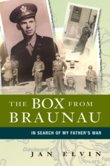
Five years after my father died, I finished my book about Dad's experiences during World War II. I had spent a lot of time holed up in libraries, museums, and places like the National Archives doing research about the war. He'd left a journal of his time in combat, excerpts of which are contained in the book, but I wanted to make sure I properly filled in the blanks left by the journal. I delved into the history of battles, the strategy, and dusty old records of the 80th Infantry Division.

I was able to answer many of the questions I had about his military service. And since Dad and I had a few conversations about the war in the year or so before he passed away, I was able to get more information about his personal experiences.

But in truth, writing the book after his death raised many more questions than it answered. Learning about the battle plans, the After Action Reports, and all the dates and times regarding his war made me want to know how he'd felt about it. So as Father's Day approaches, I decided to pull together five things I wished I'd asked my father about World War II, things only he could answer. Doesn't hurt to ask.

These are a few questions I might have asked him over a warm cup of coffee, sitting on the couch one morning, or over a beer down at the pub. I'm going settle in with a cup of coffee now and pretend Dad is sitting with me. I'll start with the questions in a gentle manner, since he didn't like to talk about this subject very much:

— Who was your best friend during the war?

I know that in your war journal you mention Graham quite often. He was a friend from your hometown of Frostburg, Maryland but he received a serious head wound not long after you entered battle in France, and was sent home. After that, who, if anyone, took his place? Did you have another best friend?

— Describe two incidents, one humorous and one serious, that you remember most vividly from the war.

— How did you deal with fear?

I know from your journal that you were very frightened during some of the artillery shelling and thought you were going to die more than once. Were you ever scared enough to think about running the other way? And I often wondered, what keeps soldiers from doing that?

— What was it like to come home?

And what might be more interesting, and surprising — what was it like six months later? Was it hard to adjust over the longer term?

— Lastly, I want to ask about Ebensee, the terrible concentration camp

I know now that you went to this camp and observed it only days after it was liberated by your Division. You had nightmares for years and suffered from your memories of that camp. You even said that it was far worse than anything you'd seen in combat. But did you ever talk about it before I asked you about it five years ago?

Anyone who has the chance to sit on the couch somewhere with a veteran, particularly a veteran of the Second World War, might try asking some questions. It will probably lead to an interesting conversation, and one you'll be glad you had. So grab that cup or coffee (or glass of beer), and don't forget the tape recorder.

Thursday, October 8, 2009

"The Greatest Generation" is Sometimes Uncomfortable with the Title


My friend George Anderson is proud of his service in the 318th Infantry Regiment in World War II but he is not fond of the term "Greatest Generation." George says that today's generation — or any generation — would perform comparably to his in wartime, and that we should let all our veterans know that we honor them and appreciate their service.

I thought of World War II veterans like George and my father when my friend April Moore sent me a link to a wonderful article called "High-Five Nation," written by David Brooks in the New York Times.

"It made me think of your dad," she said.

After reading it, I wondered if the soft spot we have in our collective hearts for that generation might come, not just from our admiration of the sacrifices they made and the success they ultimately had, but from our appreciation for their humility. See it on Andy Schmookler's blog at www.nonesoblind.org/blog?p=4174/

Wednesday, September 30, 2009

Role of Women in Wartime: Today vs. World War II


That's a huge topic, and not one that I'm going to tackle at the moment. But I do want to explore the role of women in one regard: the soldier's return home. I spoke at Politics and Prose (our wonderful local bookstore) recently and talked about how my mother and many other women had dealt with the joys and difficulties of that reunion in 1946. A member of the audience rose and asked, "How different is it now, with women soldiers returning from a war zone, sometimes to a family with young children - children who may not remember their mothers any more than your brother remembered your father when he returned from overseas?" What a great question. If any of you can shed light on this subject, please contact me at info@janelvin.com or leave a comment here. I'd especially like to talk to any women who have been deployed to Iraq or Afghanistan and have returned home to family.

And I'd like to thank to Jenny Andrews from www.notalone.com for her help. The site is a great resource, devoted to helping the community of military men, women and families to face the challenges of coming home.

On other fronts, I will be giving a talk about The Box from Braunau: In Search of My Father's War and signing books tomorrow night, October 1, in Ellicott City, Maryland at the Howard County Library, Miller Branch. You can call to sign up and get directions 410/313-1950, or go online to www.hclibrary.org to sign up. (It's not necessary to sign up in order to attend, but it helps them figure out how many chairs to put out!)

Thursday, October 1, 2009 7 p.m. Howard County Library Miller Branch 9421 Frederick Road Ellicott City, MD 21042

Photo above: My mother, Jane Elvin, showing me Raggedy Ann, early 1947.

Wednesday, September 9, 2009

Need Your Feedback on Women in Military


In this blog, I'm issuing a request:

Do you know any women in the military who would be willing to be interviewed? I'm particularly interested in finding a woman who's been deployed to a combat zone and has had to leave a family behind, and who's willing to talk about her experience upon returning home.

The photo above is of my parents and my older brother, shortly before my father left for France in 1944, where he fought in General Patton's Third Army. In The Box from Braunau: In Search of My Father's War, I outline some of the problems our family faced upon his return and in ensuing years. I am curious to hear how different that might be for women who return now from Iraq and Afghanistan.

If you are interested, please send me an email at info@janelvin.com, either to tell me your story or perhaps to tell me about someone you know. Thanks so much for any help and feedback on this! I'll keep you posted on what I find out.

Saturday, September 5, 2009

Summer Break Almost Over...

I'll be back, as Ahnold said.

I've been traveling, to wonderful San Francisco and to the Delaware beach for some summer family time, and to Pittsburgh for the 90th Reunion of the 80th Infantry Division.

I'll have more to say about the Reunion next week, when I'm back at work. I hope to see you then!