Showing posts with label concentration camp. Show all posts

Sunday, January 17, 2010

Please come to my book talk in Oakton, Virginia!


I want to issue an enthusiastic invitation to you to come hear my talk this week. I'll be discussing my book as part of The Speaker's Series, sponsored by the Friends of the Oakton Library on Wednesday, January 20 at the Oakton library, 10304 Lynnhaven Place, Oakton, Virginia at 7 p.m. The phone number if you want to call to reserve a spot is 703/242-4020. But you can also just show up at 7 p.m.


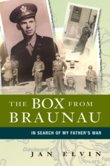
I wrote this book about my father, who served as a lieutenant in Patton's Third Army and was involved in the liberation of the Ebensee Concentration Camp. His civilian life was plagued by nightmares of combat and the camps. After his death at age 86, I read the riveting WWII diary he kept of the Allied offensive in Europe and was able to incorporate it into my book. I also interviewed family members and fellow soldiers in a rewarding but sometimes painful journey to understand the effects of post-traumatic stress disorder on my father and our family.

I hope you will be able to come - we'll have plenty of time for questions afterwards. There will be books available for purchase and signing also.

Here are just a few of the recent comments I've gotten about the book:

"I was so moved by your scholarship, sensitivity, persistence, insight and wisdom...it had a profound impact on me."

This was from a man whose father-in-law had suffered from dementia for many years: "Thank you so much for the investment of time, talent, and resources you committed to your recent book "The Box from Braunau." You so aptly and appropriately lifted the shadow from the experiences my wife's father had with your father in the 80th Division. Your research has filled a void, for which we are most grateful."

As a postscript to my last blog about Max Cleland, I want to make sure I report that he is doing very well now. Settling into his job as Secretary of the American Battle Monuments Commission, his ptsd symptoms have waned significantly. He commutes between Washington and his home in Atlanta so he can check on and care for his 96-year old father.

The above photo was taken at my talk at Politics and Prose Bookstore in Washington, DC last year.

Monday, October 19, 2009

Five things I wish I'd asked my father about World War II


Five years after my father died, I finished my book about Dad's experiences during World War II. I had spent a lot of time holed up in libraries, museums, and places like the National Archives doing research about the war. He'd left a journal of his time in combat, excerpts of which are contained in the book, but I wanted to make sure I properly filled in the blanks left by the journal. I delved into the history of battles, the strategy, and dusty old records of the 80th Infantry Division.

I was able to answer many of the questions I had about his military service. And since Dad and I had a few conversations about the war in the year or so before he passed away, I was able to get more information about his personal experiences.

But in truth, writing the book after his death raised many more questions than it answered. Learning about the battle plans, the After Action Reports, and all the dates and times regarding his war made me want to know how he'd felt about it. So as Father's Day approaches, I decided to pull together five things I wished I'd asked my father about World War II, things only he could answer. Doesn't hurt to ask.

These are a few questions I might have asked him over a warm cup of coffee, sitting on the couch one morning, or over a beer down at the pub. I'm going settle in with a cup of coffee now and pretend Dad is sitting with me. I'll start with the questions in a gentle manner, since he didn't like to talk about this subject very much:

— Who was your best friend during the war?

I know that in your war journal you mention Graham quite often. He was a friend from your hometown of Frostburg, Maryland but he received a serious head wound not long after you entered battle in France, and was sent home. After that, who, if anyone, took his place? Did you have another best friend?

— Describe two incidents, one humorous and one serious, that you remember most vividly from the war.

— How did you deal with fear?

I know from your journal that you were very frightened during some of the artillery shelling and thought you were going to die more than once. Were you ever scared enough to think about running the other way? And I often wondered, what keeps soldiers from doing that?

— What was it like to come home?

And what might be more interesting, and surprising — what was it like six months later? Was it hard to adjust over the longer term?

— Lastly, I want to ask about Ebensee, the terrible concentration camp

I know now that you went to this camp and observed it only days after it was liberated by your Division. You had nightmares for years and suffered from your memories of that camp. You even said that it was far worse than anything you'd seen in combat. But did you ever talk about it before I asked you about it five years ago?

Anyone who has the chance to sit on the couch somewhere with a veteran, particularly a veteran of the Second World War, might try asking some questions. It will probably lead to an interesting conversation, and one you'll be glad you had. So grab that cup or coffee (or glass of beer), and don't forget the tape recorder.

Wednesday, May 13, 2009

Ebensee anniversary marred by Nazi salutes and "Heil Hitler"

Five young men, dressed in army fatigues, were arrested last Saturday in Ebensee, Austria after disrupting the commemoration of the 64th anniversary of the liberation of the camp from Nazi hands. They gave Nazi salutes, shouted "Heil Hitler," and shot pellets at several of the visitors, according to police.

Their actions were in violation of Austrian law, which bans neo-Nazi activities. The president of the Austrian parliament, Barbara Prammer, called the incident " beyond belief, dastardly, and shameful," and called for a full investigation.

In last week's blog I talked about the 64th anniversary of the liberation of this same concentration camp. I learned about Ebensee from my father just before he passed away. Toward the end of the war, he and other members of the Armed Forces in Europe were urged by Generals Eisenhower and Patton to go and observe the camps as they were liberated, because both men were outraged at what they had seen in the camps. They wanted to make sure there were as many witnesses as possible to the horrors that had taken place.
Ebensee's day of liberation came on May 6, but was marked this year on the 10th, a Saturday. It's a day that brings people from all over the world, many of them camp survivors and their families, as well as the American soldiers who arrived to assure their freedom. The numbers dwindle each year as the two groups age, but in spite of the difficulties of travel, many make the pilgrimage.

When I heard what had happened this year with these neo-Nazis, I thought back to 2005, when I attended the solemn events with three friends. Both soldiers and survivors were flooded with anguished memories. Survivors greeted each other with almost disbelief that they were still alive. Tears flowed as the crowd listened quietly and respectfully to the speakers.

I can't imagine what it was like last Saturday for that respectful quiet to be so crudely and cruelly broken. Sometimes words fail.
I took the photo above at the 60th anniversary commemoration at Ebensee in 2005.